
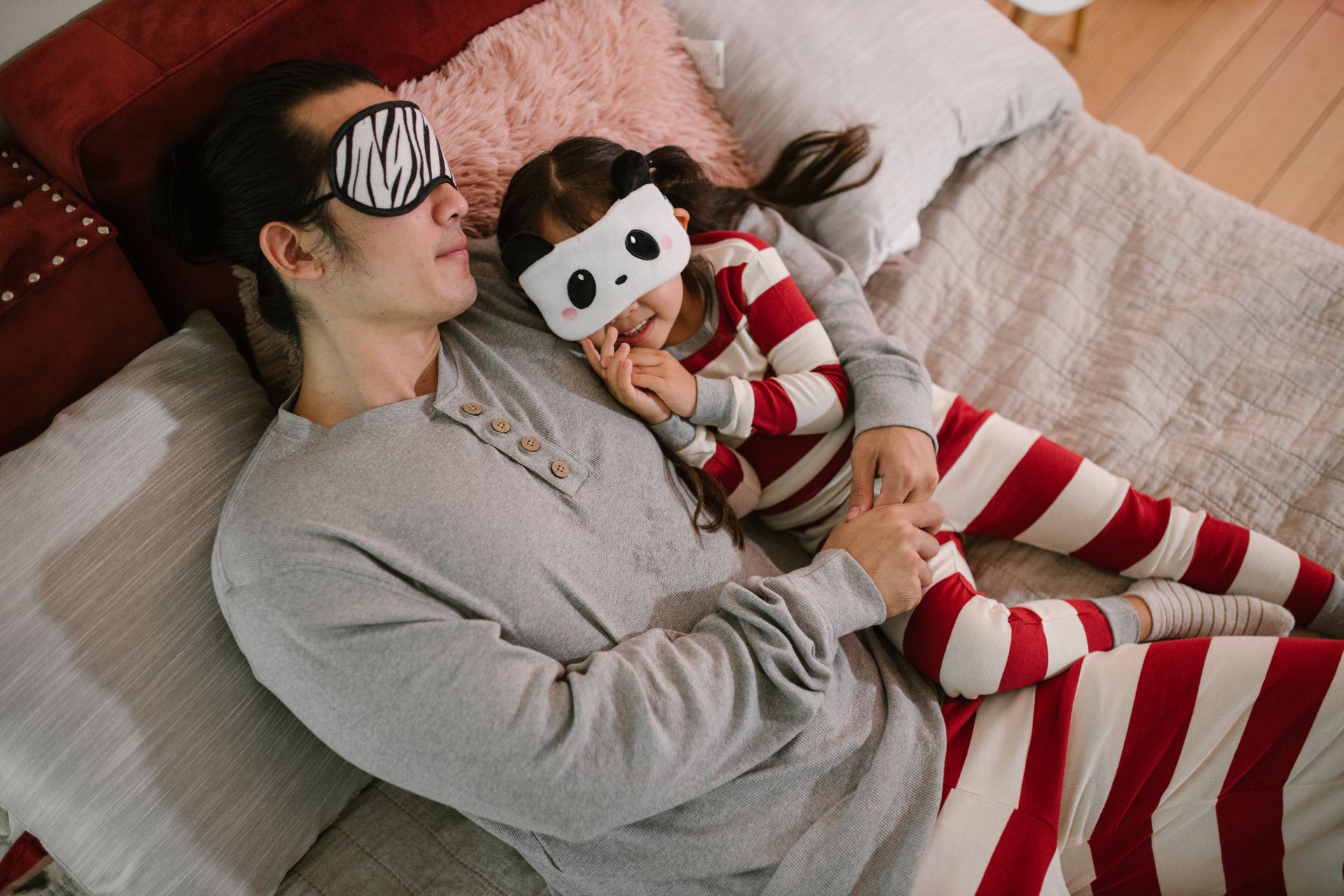
Few things shape a household’s mood quite like the family sleep routine. When it works, mornings feel almost effortless. When it slips, every evening turns into a negotiation. Most parents assume the fix is more discipline. In truth, better design — of light, temperature, and timing — does most of the work.
Support helps before rules do. Community resources such as Momma Bears offer grounded family wellness guidance built for real households rather than ideal ones. From there, three adjustments carry the load. A digital sunset an hour before bed, a cool dark bedroom, and a weekend wake time that holds.

Why Even Solid Sleepers Slowly Drift
Sleep pressure builds all day, then collides with a glowing screen at 8 p.m. That isn’t a character flaw in your child. It’s biology meeting bad lighting. Blue-heavy light suppresses melatonin, the hormone that starts the wind-down, and kids are more sensitive to it than adults are.
Moreover, the drift is gradual and sneaky. One late night becomes a weekend pattern. That pattern becomes a Monday struggle. Nobody notices until the entire week feels like jet lag.
The Digital Sunset That Actually Sticks
Pick a time, then make it visible. If bedtime lands at 8:30, the sunset begins at 7:30. No exceptions for “just one more video.”
What a Digital Sunset Looks Like in Practice
- Phones, tablets, and consoles charge in the kitchen, never beside the pillow.
- The television goes dark, though quiet music or an audiobook is fine.
- Parents follow the same rule, because kids copy what they see.
- Overhead lights switch off and lamps take over.
Therefore, the house physically dims at 7:30. That visual cue outperforms every verbal reminder you’ve ever repeated. However, don’t go cold turkey on a Wednesday. Shift the sunset fifteen minutes earlier every few nights until you reach your target.
The goal isn’t “no screens.” It’s “no screens while the body is trying to power down.”
One more thing: a parent scrolling in the hallway undoes the whole exercise. Kids read hypocrisy instantly.
Start with the easiest child, oddly enough. Momentum from one smooth bedtime tends to pull the others along, and the loudest resister often caves once the house goes quiet.
Cool, Dark Rooms Do More Than You Think
Temperature and darkness are the two levers most families ignore. Yet they shape how fast sleep arrives and how deeply it holds. Get them right and the same bedtime suddenly takes twenty minutes instead of an hour.
Dial In the Thermostat
Sleep guidance generally lands between 65 and 68 degrees Fahrenheit for adults. Children run slightly warmer, so aim for the lower end of what feels comfortable. A warm bath ninety minutes before bed helps more than a warm room does. The after-bath cooldown does the heavy lifting.
Watch for a room that feels warm at 2 a.m. even when it was cool at 10 p.m. Bodies heat up overnight, and a slightly cooler start usually balances it out.
Then Kill the Light
Blackout curtains are boring, cheap, and effective. So is covering the tiny LEDs on monitors, humidifiers, and smoke detectors. A single blue standby light can bother a light sleeper all night.
- Hang curtains that overlap the window frame by a few inches.
- Use painter’s tape or dimming stickers on stubborn indicators.
- Keep a dim red nightlight in hallways instead of a bright white one.
- Close the bedroom door to block light from the rest of the house.
Weekend Wake Times Hold the Family Sleep Routine Together
Here’s the part parents resist most. Sleeping in on Saturday feels earned, and it quietly wrecks Sunday night. A two-hour weekend shift is the rough equivalent of flying two time zones every single week.
Therefore, keep weekend wake times within thirty to sixty minutes of weekday ones. If a teenager really needs more rest, an afternoon nap is a better trade than a 10 a.m. lie-in. Consistency on this one variable protects the rest of the family sleep routine.
A Compromise Nobody Hates
Give everyone a thirty-minute grace window. Set an alarm, open the curtains, and let morning light finish the job. Sunlight within an hour of waking anchors the entire schedule.
Building the Family Sleep Routine in Two Weeks
Change everything at once and the house revolts. Stage it instead.
- Nights 1-3: set the digital sunset and hang blackout curtains.
- Nights 4-6: drop the thermostat and add a white noise machine.
- Nights 7-10: lock in wake times, weekends included.
- Nights 11-14: hold steady and expect pushback around night nine.
Realistically, night three is rough and night ten is easier. Consistency beats intensity here. A routine that survives a bad Tuesday is worth more than a perfect one that collapses by Friday.
Troubleshooting the Predictable Stumbling Blocks
“I’m Not Tired”
That claim is often true, and it usually points to a light problem. Bright rooms and screens delay the sleepy signal. Dim the house earlier and the complaint fades within a week or so.
The Late-Shift Parent
A partner arriving home at 11 p.m. shouldn’t reset the household. Quiet hellos and a dimmed lamp keep the wind-down intact. Save the stories for breakfast.
When a Family Sleep Routine Needs Outside Help
Sometimes the routine is solid and sleep still won’t come. Loud snoring, restless legs, or a child who wakes gasping deserve a pediatric conversation, not another bedtime chart. Night terrors warrant a mention too, even though most fade on their own.
Track two weeks of sleep and wake times before that appointment. Patterns beat memories, and a simple log gives a clinician something concrete to work with. Bring it on paper, not as a vague recollection.
What Quietly Changes After a Month
The wins are subtle. Mornings move faster. Tantrums thin out. Parents stop negotiating at 9 p.m. and start reading novels again.
None of that requires new furniture or a bigger house. An hour of dim light, a cooler room, and a Saturday alarm nobody wants to set will do it.