
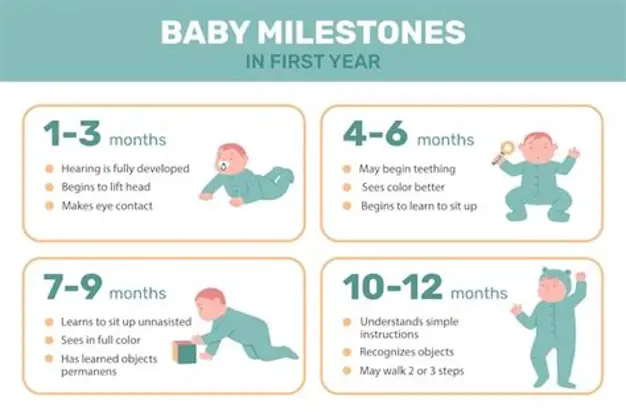
Baby Development Milestones give parents a helpful way to understand how infants grow, learn, communicate, and interact with the world. Although every child develops at a different pace, certain skills commonly appear during the first year and beyond. Rather than treating these skills as strict deadlines, parents can use them as general guides. Most importantly, observing gradual progress can help families celebrate new abilities while recognizing when a child may need additional support.
What Are Development Milestones?
Development milestones are skills that many children develop within a particular period. These skills generally fall into several areas of growth:
-
Physical development: Rolling, sitting, crawling, standing, and walking.
-
Communication: Making sounds, responding to voices, babbling, and eventually using words.
-
Social development: Smiling, making eye contact, responding to familiar people, and showing affection.
-
Cognitive development: Exploring objects, recognizing familiar patterns, solving simple problems, and learning through play.
These areas often overlap. For example, when a baby reaches for a toy, the child practices physical coordination while also developing curiosity and problem-solving skills.
How Development Changes During the First Year
The first year brings remarkable changes. During the early months, babies gradually gain better control over their heads and bodies. They also begin responding more deliberately to sounds, faces, and voices.
Birth to Three Months
During this stage, babies typically spend much of their time observing their surroundings. They may briefly lift their heads while lying on their stomachs, follow moving objects with their eyes, and react to familiar voices.
Social responses also become more noticeable. A baby may begin smiling in response to interaction and making simple sounds to communicate interest or discomfort.
Four to Six Months
Between four and six months, many babies become more active. They may roll from one position to another, reach for objects, grasp toys, and bring items toward their mouths.
Communication also becomes more expressive. Babies often experiment with different sounds and may respond when adults talk to them. These interactions help establish the foundation for later language development.
Seven to Nine Months
As babies become stronger and more mobile, they may sit without support, move across the floor, or begin pulling themselves toward objects. Some babies crawl, while others develop different ways of getting around.
At this stage, babies also become increasingly interested in cause and effect. They may drop a toy repeatedly, for example, because they enjoy seeing what happens when it falls.
Ten to Twelve Months
Toward the end of the first year, many babies become more confident explorers. They may pull themselves to standing, move while holding furniture, use gestures, and understand familiar words.
Some children may also say simple words or imitate sounds. However, development varies considerably, so one child may walk early while another focuses more heavily on communication or social interaction.
Supporting Healthy Development at Home
Parents do not need expensive equipment or elaborate activities to encourage development. Everyday interactions provide valuable learning opportunities.
Talk, Read, and Sing
Speaking to your baby throughout the day helps expose them to language. Narrate simple activities, respond to their sounds, and read picture books together. Even before babies understand words, they learn from tone, rhythm, repetition, and facial expressions.
Encourage Safe Movement
Give babies safe opportunities to move and explore. Supervised floor play can help them practice reaching, turning, sitting, and other physical skills. As mobility increases, make the environment safer by securing furniture and keeping small objects out of reach.
Follow Their Interests
Babies naturally show curiosity. If your child becomes fascinated by a particular toy, sound, or activity, use that interest to encourage learning. Simple games such as peekaboo, stacking cups, or passing a toy back and forth can support attention, coordination, and social interaction.
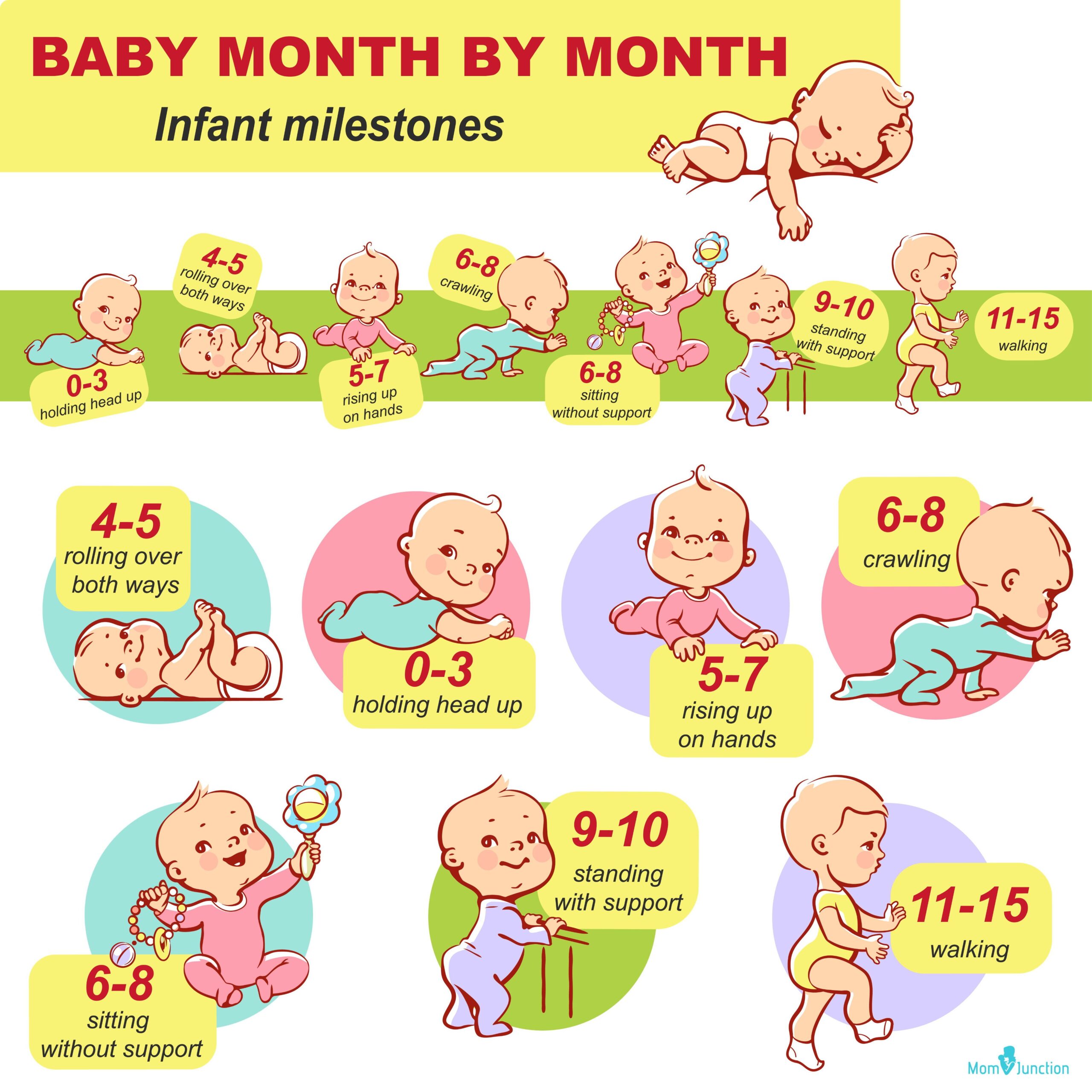
When Should Parents Seek Advice?
Understanding Baby Development Milestones can help parents notice both progress and potential concerns. If a baby loses a skill they previously had, does not seem to respond to sounds or people, or consistently struggles with age-appropriate activities, parents should discuss their observations with a pediatrician or other qualified healthcare professional.
Importantly, a missed milestone does not automatically indicate a serious problem. Children develop at different rates, and professionals can consider the child’s overall pattern of growth before recommending further evaluation.
Why Individual Progress Matters
Baby Development Milestones should serve as guides rather than rigid deadlines. Genetics, environment, temperament, opportunities for movement, and many other factors can influence when children acquire specific skills.
Parents can therefore focus on progress instead of comparison. A child who takes longer to walk may excel in communication, while another child may become physically active earlier but take more time to develop speech. Both patterns can occur within healthy development.
Creating a Positive Learning Environment
Baby Development Milestones become easier to understand when parents observe children during ordinary routines. Mealtimes, bath time, play, bedtime, and family conversations all provide opportunities to learn.
The best approach combines patience, interaction, safety, and regular observation. Parents can celebrate small achievements, provide age-appropriate challenges, and give babies plenty of opportunities to practice new skills.
Ultimately, Baby Development Milestones offer a useful framework for understanding early childhood growth. By paying attention to physical, social, cognitive, and communication changes, parents can better appreciate each stage while creating an environment where their baby feels secure, encouraged, and ready to explore.